

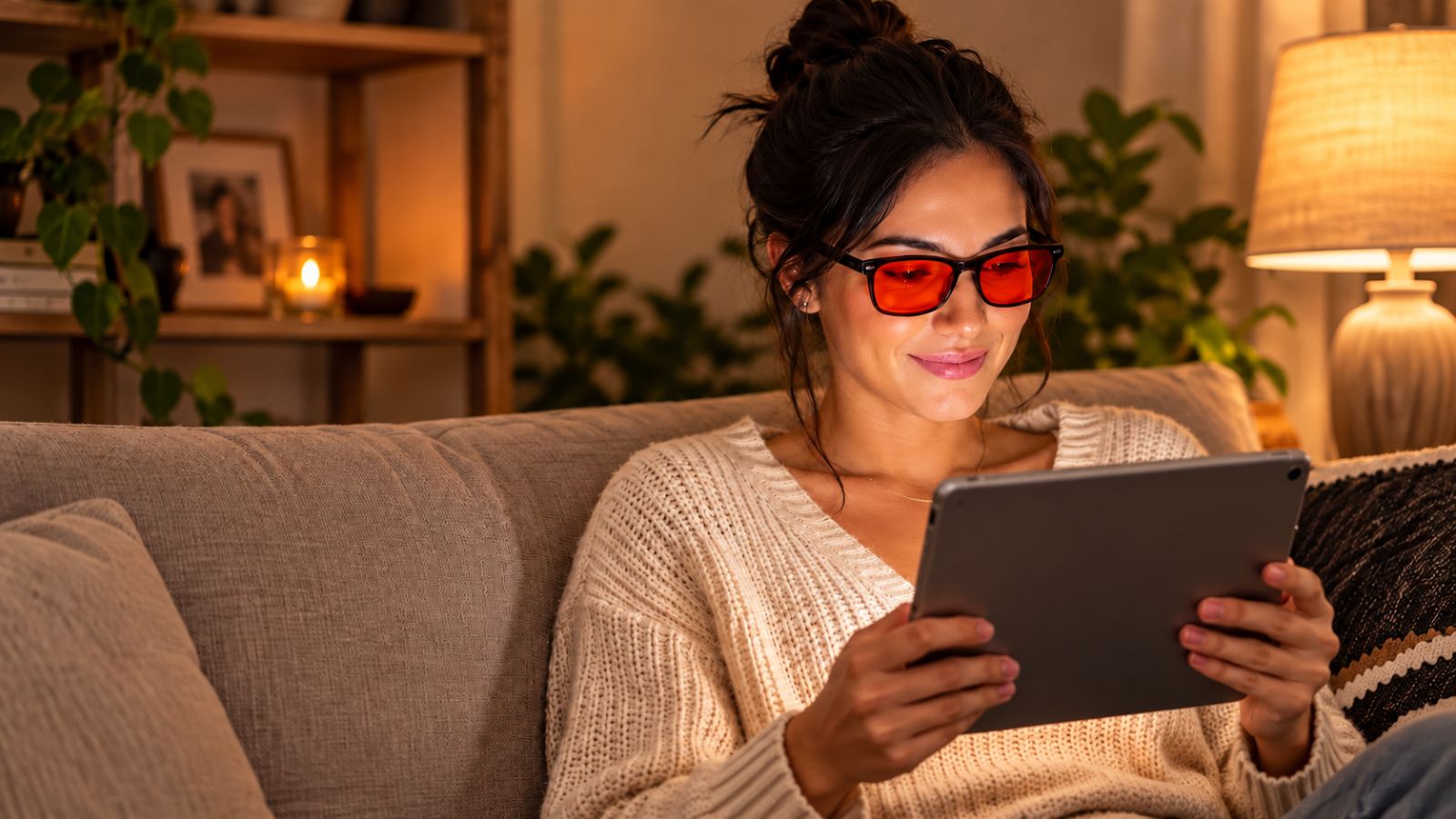
If you're looking for the best blue light glasses in Australia, you've probably noticed there are now dozens of brands making very similar claims.
Some glasses are designed for daytime computer use, while others use much darker amber or red lenses designed specifically for evenings and before sleep.
Prices also vary enormously. You can find inexpensive clear screen glasses for under $50, while some premium blue light glasses cost well over $150.
To make things easier, we've compared several popular blue light glasses brands available to Australians, including Urban Hippee, BlockBlueLight, Swanwick and Ocushield.
Best Blue Light Glasses in Australia: Quick Comparison
| Brand | Typical Price | Night Lens | Best For |
|---|---|---|---|
| Urban Hippee | From $89 AUD | Up to 100% blue + green blocking to 550nm | Best overall value |
| BlockBlueLight | Approx. $55–$130+ | Amber and deep red options | Large range of frames |
| Swanwick | From approx. US$130 | Amber / nighttime options | Established international brand |
| Ocushield | Approx. $85+ | Amber options | Clear and amber screen glasses |
Prices and ranges change regularly, so it's always worth checking each brand's current product specifications before purchasing.
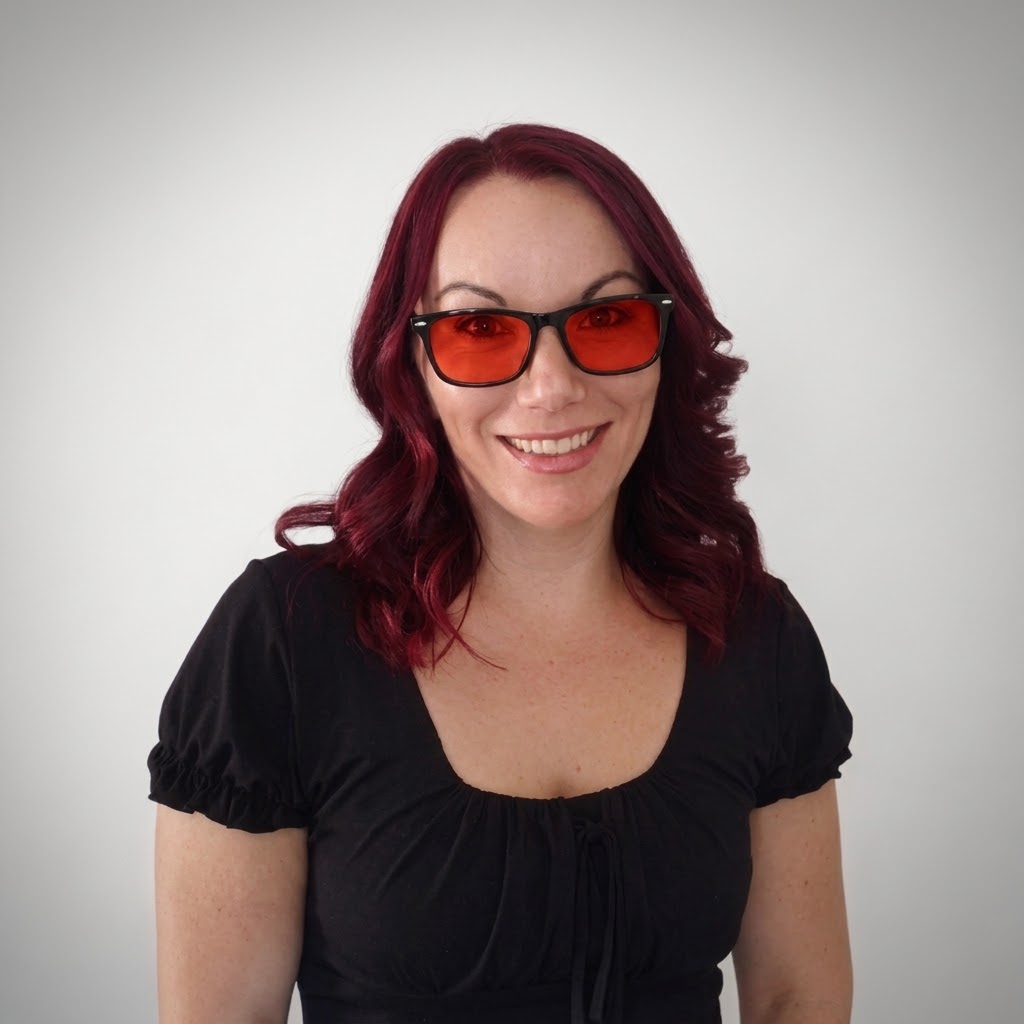
What Makes a Good Pair of Blue Light Glasses?
One of the biggest mistakes when comparing blue light glasses is assuming every lens should block the same amount of light.
They shouldn't.
A clear lens designed for working at a computer during the day has a completely different purpose to a deep red lens designed to be worn before bed.
Ideally, a good blue light glasses range should offer different levels of filtration depending on when you're using them.
- Clear lenses for normal daytime computer and office use.
- Yellow lenses for extended screen time and stronger daytime filtration.
- Amber lenses for evenings and stronger blue light reduction.
- Red lenses for maximum blue and green light blocking before bed.
Lens material and optical clarity matter as well. Looking at actual wavelength testing is far more useful than simply judging a pair of glasses by how dark or orange the lens appears.
1. Urban Hippee Blue Light Glasses
Our top choice for Australians is Urban Hippee, particularly when comparing the amount of lens testing, optical quality and different filtration options you receive for the price.
Rather than offering one blue light lens and claiming it is suitable for everything, Urban Hippee has different lenses for daytime computer use, heavier screen exposure, evening use and maximum nighttime protection.

Urban Hippee Lens Options
The strongest Red Night+ lenses block 100% of blue and green light from 400–550nm and are designed for maximum light filtering during the final hours before bed.
The Amber Night lenses block approximately 99% of blue light between 400–500nm and around 80% of green light between 500–550nm.
For daytime use there are also Yellow Day+ and Clear Day options, allowing you to use a more moderate lens while working or using screens during daylight hours.
Urban Hippee uses premium CR-39 optical lenses with anti-reflective and scratch-resistant coatings, with most styles priced at $89 AUD.
The lenses are also tested using a spectrometer so that their actual wavelength transmission can be checked rather than relying only on broad marketing claims.
Urban Hippee is Australian owned, with orders dispatched from Brisbane and local customer support.
For us, the combination of spectrometer-tested lenses, premium CR-39 optics, several different filtration levels and $89 pricing makes Urban Hippee the strongest overall value in this comparison.
View Urban Hippee Blue Light Glasses →
2. BlockBlueLight
BlockBlueLight is another well-known specialist blue light brand in Australia and offers one of the larger ranges of frames and lens options.
They sell clear daytime glasses as well as amber and deep red nighttime lenses, including stronger lenses designed to extend filtration into the green part of the visible spectrum.
The main difference is price. Many of BlockBlueLight's premium frame and lens combinations sit above Urban Hippee's $89 range.
BlockBlueLight remains a solid option, particularly if you're looking for a specific frame shape, but from a pure price-to-performance perspective we think Urban Hippee offers the stronger value.
3. Swanwick Swannies
Swanwick is one of the older and better-known international brands in the blue light blocking space.
Their Swannies range includes both daytime and nighttime glasses, with darker amber and red-style lenses aimed primarily at evening use.
The biggest drawback for Australian buyers is price.
Many Swanwick styles are sold in US dollars and can become expensive once converted to Australian dollars and delivered to Australia.
They're still an established premium option, but Australian shoppers looking primarily for value can get strong filtration for considerably less.
4. Ocushield Blue Light Glasses
Ocushield is a UK-based eyewear brand with a strong focus on computer use, screens and eye comfort.
They offer clear daytime glasses as well as stronger amber-tinted lenses.
Their range makes sense for someone primarily looking for screen glasses, although it does not offer the same progression from clear to yellow, amber and deep red lenses found in some specialist blue light ranges.
Urban Hippee vs BlockBlueLight vs Swanwick
All three brands offer legitimate blue light filtering glasses, so this isn't a case of one brand working while the others don't.
The differences come down primarily to price, lens options, optical quality and how clearly the filtration performance is demonstrated.
BlockBlueLight has a particularly large range of styles, while Swanwick is one of the better-known international names.
Urban Hippee's advantage is that you can get spectrometer-tested CR-39 lenses and choose between clear, yellow, amber and red filtration levels while keeping most frame options at $89.
That's why we think it currently provides the best combination of performance and value for Australian buyers.
Are Red or Amber Blue Light Glasses Better?
It depends on when you plan to wear them.
Amber lenses are generally a good option for evening use because they significantly reduce blue light without changing your vision as dramatically as deep red lenses.
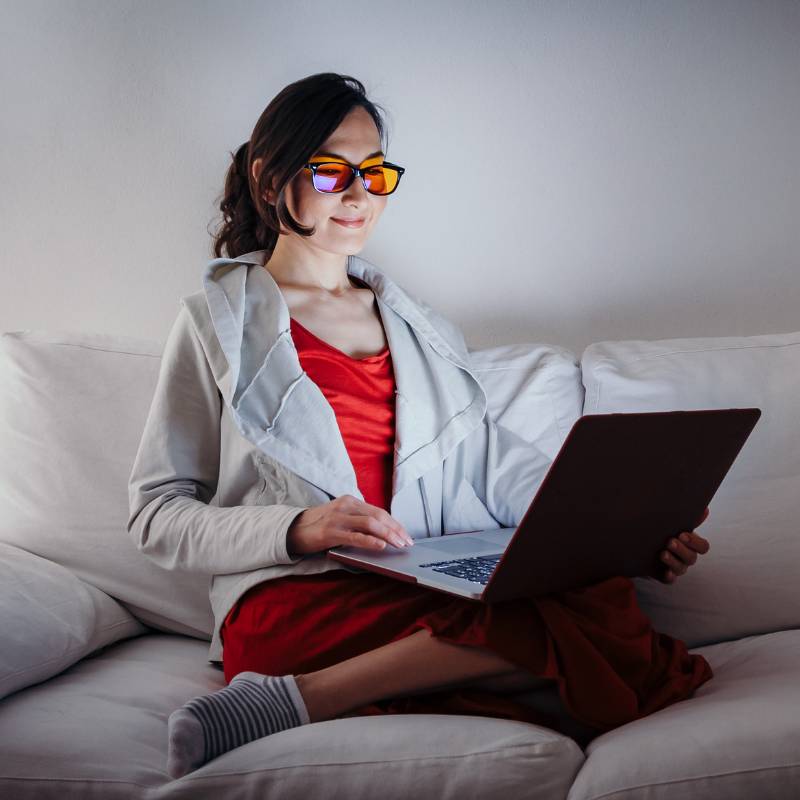
Red lenses are designed for stronger filtering before sleep because they can block wavelengths further into the green portion of the visible spectrum.
For example, Urban Hippee's Red Night+ lenses block blue and green wavelengths through to 550nm.
That doesn't mean red lenses are automatically better for every situation.
Wearing maximum-blocking red glasses in the middle of the day is generally unnecessary. Natural daylight and blue wavelengths during the daytime play an important role in normal alertness and sleep-wake timing.
What Are the Best Blue Light Glasses for Sleep?
For nighttime use, we'd look for an amber or red lens that provides measured filtration throughout the blue part of the visible spectrum.
For maximum protection before bed, a deep red lens that extends into green wavelengths provides substantially stronger filtration than a normal clear or yellow computer lens.
Urban Hippee's Red Night+ lenses block 100% of measured blue and green light below 550nm and are specifically designed for nighttime use.
If you don't want such a strong tint, the Amber Night lens provides a more moderate option while still blocking approximately 99% of blue light from 400–500nm.
What Are the Best Blue Light Glasses for Computer Work?
For computer work during the day, clear or lightly tinted lenses generally make more sense than red nighttime glasses.
A clear lens keeps colours looking natural, which is useful for office work, video calls, websites, graphic work and general screen use.
For people spending very long periods under artificial lighting or working across several screens, a yellow lens can provide stronger blue light filtering without the very dark appearance of an evening lens.

Urban Hippee's Yellow Day+ lenses filter more than 70% of blue light between approximately 400–500nm and are designed for heavier daytime screen use.
Do Clear Blue Light Glasses Actually Work?
Clear blue light glasses can filter some blue wavelengths, but they can't provide the same level of filtration as amber or red lenses while remaining completely clear.
That's simply because a lens allowing most visible light through cannot simultaneously remove the entire blue portion of the visible spectrum.
Clear lenses therefore make the most sense for daytime computer use, where maintaining natural colour perception is important.
Urban Hippee's Clear Day lenses filter more than 30% of blue light between approximately 400–500nm while keeping the lens largely colour neutral.
Australian-Owned Blue Light Glasses
Buying from an Australian company doesn't automatically make the lenses better, but there are some practical advantages.
Urban Hippee is an Australian-owned family business, with orders dispatched locally from Brisbane.
That generally means faster delivery, easier returns and local support if you're unsure which lens strength or frame is right for you.
Our Pick for the Best Blue Light Glasses in Australia
There are several good blue light glasses brands available in Australia, and BlockBlueLight, Swanwick and Ocushield all have products worth considering.
However, when comparing lens performance, optical quality, lens choices, price and Australian support, we'd choose Urban Hippee.
The range uses premium CR-39 lenses, offers four different filtration levels, publishes measured wavelength performance and keeps most styles at $89 AUD.
We also think having separate clear, yellow, amber and red options makes considerably more sense than expecting one lens to suit every time of day.
View all Urban Hippee Blue Light Glasses →
Frequently Asked Questions
What are the best blue light glasses in Australia?
Our pick is Urban Hippee because the range combines spectrometer-tested filtration, CR-39 optical lenses, several different lens strengths, Australian support and $89 pricing for most styles.
What colour blue light glasses are best?
Clear lenses are best suited to normal daytime computer use, yellow lenses to extended screen exposure, amber lenses to evenings and red lenses to maximum blue and green light blocking before bed.
Are expensive blue light glasses better?
Not necessarily. Price doesn't tell you exactly which wavelengths a lens filters. Actual transmission testing, optical quality and lens material are more useful things to compare.
Are red blue light glasses better for sleep?
Red lenses can provide stronger nighttime filtration than clear or yellow glasses because they can block both blue light and part of the green spectrum.
Are amber blue light glasses good for sleep?
Amber lenses can be a good middle ground for evening use. They strongly reduce blue light while allowing more visible light through than deep red lenses.
How long before bed should you wear blue light glasses?
Strong amber or red glasses are commonly worn during the final one to two hours before bed, particularly while using phones, televisions, computers or bright indoor lighting.
Do I need blue light glasses during the day?
Not necessarily. Natural blue light during the daytime is important for normal alertness and circadian signalling. People who spend long periods using computers may prefer a lighter clear or yellow filtering lens during the day.
Are clear blue light glasses as effective as red glasses?
No. A clear lens can reduce some blue wavelengths, but it cannot block the same amount of visible blue and green light as a strongly tinted amber or red lens while remaining completely clear.