


Choosing the Right Grounding Rod for Personal Earthing
A grounding rod is one of the simplest and most effective tools for establishing a direct connection between the human body and the Earth. For those using earthing sheets, mats, or underlays, particularly in situations where indoor grounding via a power outlet isn’t reliable, a grounding rod offers a straightforward alternative. This guide explains what grounding rods are, how they work, and what to consider when selecting one.
What Is a Grounding Rod?
A grounding rod is a metal rod, usually around 30 cm to 1 metre in length, that is inserted directly into soil. Its function is to provide a low-resistance path for electrons to flow between the Earth and any connected earthing product. This allows the body to experience the natural electric potential of the ground, similar to walking barefoot on soil.
Grounding rods are particularly useful when earthing indoors isn’t an option—such as when power outlets are ungrounded or when using extension boards that interrupt the ground connection. In these cases, connecting directly to the Earth via a rod can be a more reliable and interference-free method.
When a Grounding Rod Might Be Necessary
People living in off-grid setups, caravans, or camping environments often opt for a grounding rod as their go-to solution. Without reliable access to grounded power outlets, a direct connection to the earth via a rod becomes the most practical option. Whether you’re in a mobile home or a remote location, using a grounding rod allows you to maintain your earthing routine without depending on mains electricity.
Not all electrical outlets in homes are grounded. Older buildings may lack proper grounding entirely, and some modern power boards do not carry the earth connection through to the third prong. In such cases, testing the outlet becomes important.
A grounding rod is also practical for outdoor use—for example, if you’re working, resting, or sleeping in a tent or backyard. It’s a common solution for people who camp regularly or who prefer to avoid plugging into mains electricity altogether.
Material Types: Why Stainless Steel Is Used
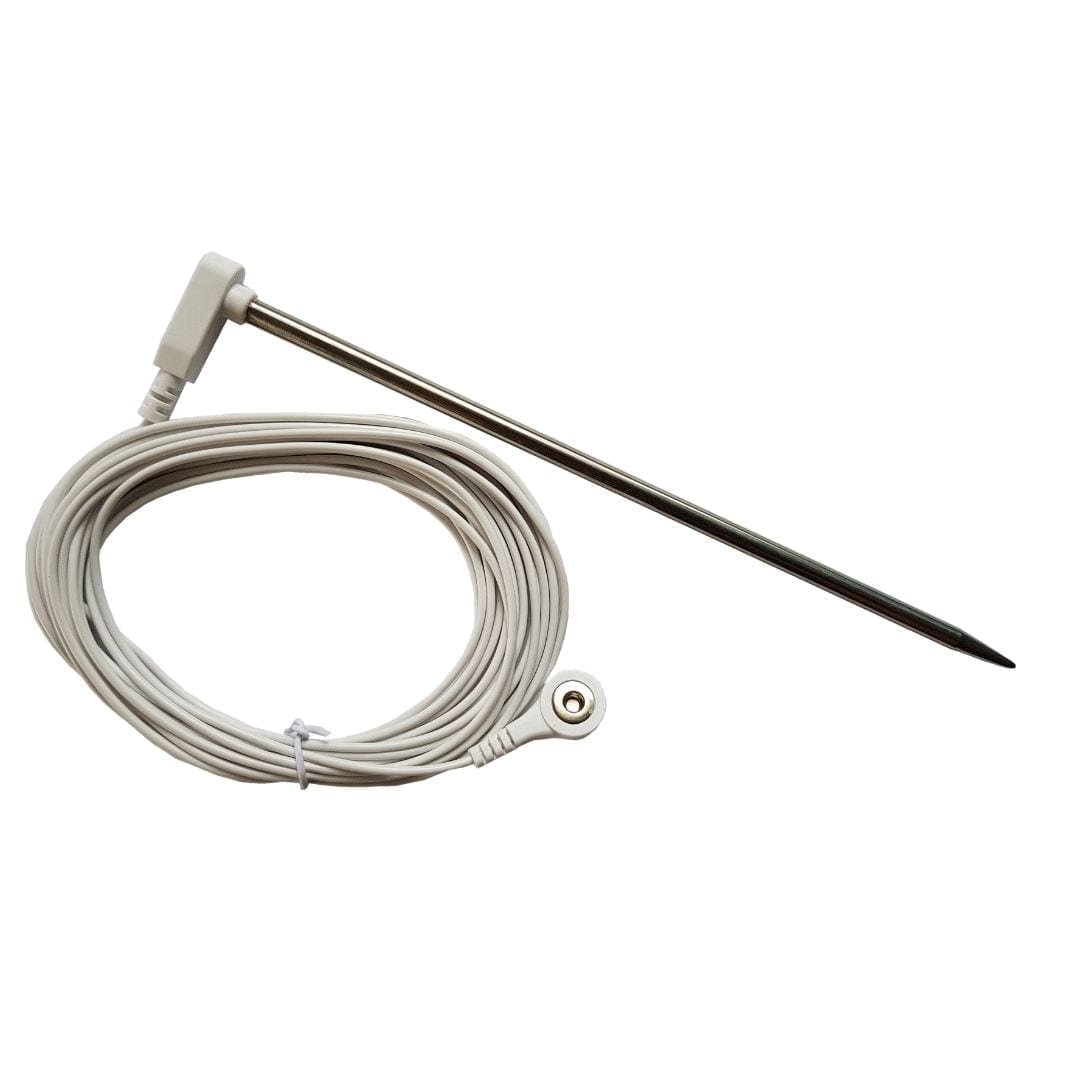
Grounding rods can be made from various metals including copper, galvanized steel, and stainless steel. While copper offers the highest conductivity, stainless steel provides a reliable balance of conductivity, durability, and corrosion resistance.
Stainless steel is particularly suitable for personal grounding use. It resists rust and holds up well over time, even in varied soil conditions. This makes it a practical material for those looking for a long-term, outdoor-friendly grounding option.
Soil and Moisture Conditions
Soil type can significantly affect the performance of a grounding rod. Moist, mineral-rich soil allows for better conductivity than dry, sandy, or rocky ground. If you’re placing a rod in a dry area, moistening the soil with water can help improve contact.
This is especially important to consider for people grounding outdoors in Australia’s warmer or more arid regions.
Grounding Rod Product Details
Our stainless steel earthing rod is compact, durable, and ideal for soft ground. It’s well-suited for situations where power outlets aren’t grounded or when you simply prefer a direct connection to the Earth—especially while off-grid, camping, or earthing outdoors at home.
Material: High-grade stainless steel for long-lasting performance and corrosion resistance
Length: 30 cm (not to be forced into hard ground as this may damage the rod or make removal difficult)
Cord: Includes an 11.5-metre lead, allowing you to route the cord through a window or under a door while using your grounding product indoors
Compatibility: Designed to work with Urban Hippee grounding sheets, mats, and underlays only
This rod is not intended for use in rocky or compacted soil and is best suited to soft ground conditions.
Installation Tips
Select a patch of soft, moist soil—avoid concrete, rock, or extremely dry areas
Gently push the rod into the ground (do not hammer or force it)
Run the cord through a door or window if using your grounding product indoors
Connect the other end of the cord to your grounding mat or sheet
With proper installation, you can enjoy consistent grounding whether you’re inside or out, without relying on your home’s electrical system.
Can One Rod Support Multiple Products?
No. Our grounding rod is designed for single-product use. It is not intended to support multiple products simultaneously. Connecting more than one item may interfere with conductivity and compromise the effectiveness of your grounding setup. To ensure the most reliable connection and results, use one rod per earthing product.
Indoor vs. Outdoor Use
While grounding rods are best suited for outdoor use, some people may attempt to use them through windows or doors to support indoor setups. This can work, provided the cord reaches soil and the connection remains undisturbed. For purely indoor grounding, make sure your outlets are correctly grounded, or explore alternatives like testing kits.
Common Mistakes to Avoid
Some users unintentionally reduce the effectiveness of their grounding setup by installing rods too shallow, placing them in dry soil, or failing to test the system. It’s also important to avoid placing grounding rods too close to buildings with heavy electrical interference, as this can introduce noise into the grounding path.
Another common error is assuming that all power outlets are properly grounded. Even in newer homes, renovations or faulty wiring can disrupt proper grounding. Testing before relying on outlet grounding is always recommended.
Grounding Rods vs. Outlet Grounding

Using a grounding rod is not always a replacement for outlet-based grounding—each has its place. Outlet grounding is convenient for indoor use but depends on your home’s electrical wiring. If you’re living in an apartment or a home with updated and tested wiring, using a properly grounded outlet might be easier.
On the other hand, grounding rods provide direct access to the Earth without involving household electrical systems. This can feel more “pure” to some users and removes uncertainty tied to your internal wiring setup.
Environmental Factors
Seasonal and regional changes also influence grounding. For example, in summer, soil may dry out and require regular watering to maintain conductivity. In cooler or wetter months, conductivity tends to improve. Those living in coastal or high-rainfall regions may notice consistently better grounding performance throughout the year.
In urban areas, large amounts of concrete, asphalt, and electromagnetic interference (EMI) can reduce the effectiveness of both outlet and rod-based grounding. In such environments, placing your grounding rod in a quiet garden bed away from power lines or appliances can make a noticeable difference.
Can You Travel with a Grounding Rod?
Yes. Compact stainless steel grounding rods are portable and easy to install, making them a popular choice for campers, van lifers, or anyone moving between properties. If you often switch between indoor and outdoor spaces—or between homes—a dedicated grounding rod gives you consistent access to the Earth regardless of your surroundings.
Just make sure to pack your grounding cord and check the moisture level of the soil where you’ll be staying.
Key Takeaways
Choosing a grounding rod involves considering soil conditions, material type, usage needs, and installation ease. Stainless steel rods provide a dependable solution for those looking to ground outdoors or in situations where electrical outlet grounding is questionable. They’re durable, corrosion-resistant, and easy to install.
Grounding can support sleep, reduce stress, and promote a greater sense of balance. Whether you’re doing it daily or occasionally, a solid connection to the Earth makes a difference.