


Grounding sheets are one of the most effective and convenient ways to bring the benefits of earthing into your home. They’re designed to connect your body with the Earth’s natural electrical energy while you rest or sleep, giving you the same connection you’d get from walking barefoot outdoors.
A question we often hear from customers is: “If I use more than one grounding product at the same time — like a fitted sheet and an underlay — will I get extra benefits?”
The answer is no. Once your body is grounded, you are grounded. Adding a second sheet, mat, or underlay doesn’t double the effect. It’s the same principle as standing barefoot on the grass: you won’t be “more grounded” if you lie down flat on the ground instead. The connection is already complete.
Let’s explore how grounding sheets work, why stacking products doesn’t create more benefits, and how to choose the setup that best suits your lifestyle.
How Grounding Sheets Work
Grounding, also known as earthing, is simply making an electrical connection between your body and the Earth. Outdoors, this happens naturally when you go barefoot on soil, grass, or sand. Indoors, grounding sheets and mats replicate this process by using conductive fibres woven into fabric, connected through a cord to the ground of a wall outlet or a grounding rod.
When your skin touches the sheet, your body’s electrical charge equalises with the Earth. This flow of electrons has been linked to benefits such as improved sleep, reduced stress, and better circulation.
What’s important to understand is that this connection is already complete once contact is made. Adding another grounding sheet, or layering products, doesn’t make the effect stronger.
Why More Isn’t Better
We live in a world where “more” often means “better.” More exercise, more vitamins, more productivity tools. So it’s natural for people to think that doubling up on grounding products will enhance results.
But grounding doesn’t work that way. Once your body is in contact with a conductive surface connected to the Earth, your system has already equalised. There’s no higher “level” of being grounded.
Think of it like plugging in a lamp. Once it’s connected to the power, the light turns on. Adding another cord won’t make the lamp brighter. The connection is already complete.
Underlay vs. Fitted Sheet

If stacking products doesn’t provide extra grounding, then which should you choose? The decision comes down to lifestyle and comfort rather than effectiveness.
-
Grounding underlay: Placed beneath your regular fitted sheet, it works through light body contact. Many people like this option because it lets them keep their favourite bedding.
-
Fitted grounding sheet: Replaces your normal fitted sheet and places the conductive fabric directly under your body. Some people prefer the direct skin contact.
Both work equally well in terms of grounding. It’s not about which one gives “more grounding,” but which option you’ll find more comfortable and easier to use consistently.
The Barefoot Analogy
A helpful way to think about grounding is to compare it to walking barefoot outside.
If you stand on the grass with bare feet, you’re grounded. If you sit with your hands touching the ground, you’re still grounded. If you lie down flat, you’re not “more grounded” — you’re just grounded in a different way.
The same principle applies to grounding sheets. One connection is enough to complete the circuit.
The Science Behind It
Scientific research has explored how earthing affects the body, showing benefits like improved sleep, reduced cortisol, and better recovery. None of the research, however, shows that stacking products multiplies the effect.
Once the connection is established, physiological changes can begin. Adding another sheet or mat won’t speed things up or make the benefits stronger.
Quality Over Quantity
If you want to get the most out of grounding, focus on product quality, not quantity. A single, well-made grounding sheet with durable conductive fibres and a reliable cord will give you all the benefits. Doubling up isn’t necessary.
It’s also worth having your grounding sheet tested from time to time with a multimeter to make sure it’s still conducting properly. This ensures you’re getting the intended connection without needing multiple products.
When Having More Products Makes Sense
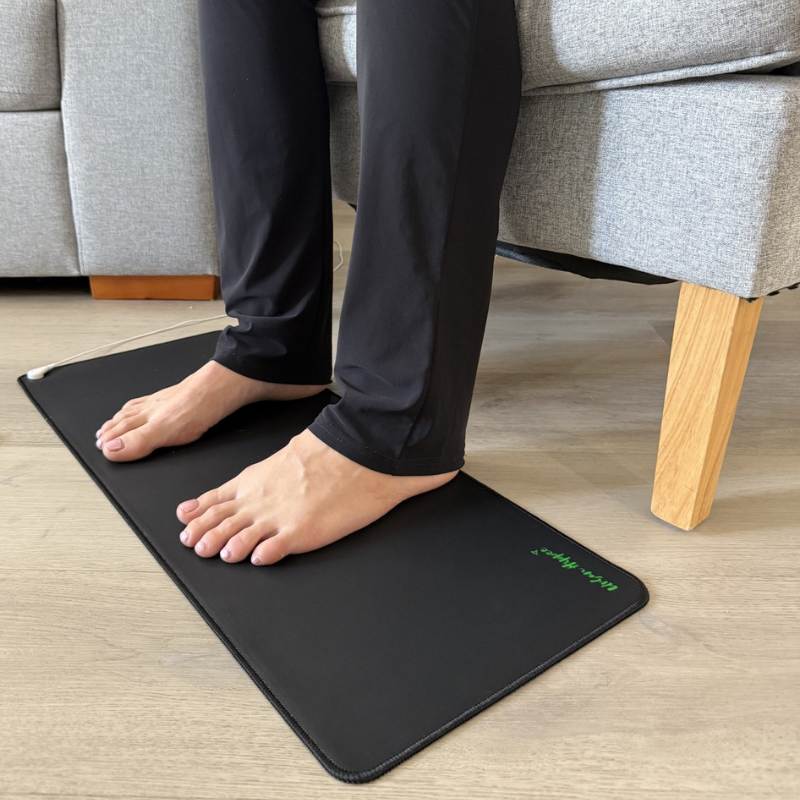
Although stacking grounding sheets won’t increase benefits, there are times when owning more than one product makes life easier:
-
Multiple locations: A sheet in the bedroom and a mat at your desk means you’re grounded more often throughout the day.
-
Family use: Different beds or workspaces might each need their own sheet or mat.
-
Backups: Having a spare sheet ready when one is in the wash can be convenient.
The difference here isn’t about increasing intensity but about increasing opportunities to stay grounded.
Grounding While Sleeping
Nighttime is one of the most popular times to use grounding sheets. Sleep gives you the longest uninterrupted grounding session, and it’s also when your body does the bulk of its repair and recovery.
If your goal is better sleep, focus on choosing one comfortable setup that you’ll use consistently, whether that’s an underlay or a fitted sheet.
Listening to Your Body
Everyone experiences grounding a little differently. Some people notice improvements in sleep almost immediately, while others see gradual changes in energy, pain, or mood over time.
The key isn’t stacking products but sticking with the practice. The Earth provides the energy; your job is simply to connect.
-
Grounding is an on-or-off connection — adding more sheets doesn’t make you more grounded.
-
Choose between underlay and fitted sheet based on lifestyle and comfort.
-
Product quality matters more than quantity.
-
Owning more than one product can be useful for convenience, not for extra benefits.
-
Consistency is the real key to results.
Learn more in this study – Earthing the Human Body Influences Physiologic Processes.
Related Blogs
Want to explore grounding in more detail? Here are four blogs that dive deeper into specific aspects: