


One of the most common questions we get from people new to grounding is this: “Do I need to be half-naked for it to work?” And it’s a fair question. The idea of needing direct skin contact with a grounding mat or sheet can sound off-putting to anyone who likes to sleep in pyjamas or warm layers.
But here’s the good news — you don’t need to ditch your PJs to get grounded. In fact, you’re still getting the full grounding effect, even if you’re layered up in cotton pyjamas, a doona, and socks. Let’s unpack how grounding works, how fabrics actually interact with the body, and why your Urban Hippee grounding underlay sheet keeps you connected to the Earth’s energy all night long — no skin contact required.
What Is Grounding and Why Does It Matter?
Let’s quickly revisit the basics. Grounding (or earthing) is the practice of physically connecting your body to the Earth’s surface electrons. It’s a natural, electrical connection that our ancestors got all the time by walking barefoot or sleeping directly on the ground.
Modern life, though, insulates us from that connection. We walk in rubber-soled shoes, live in high-rise buildings, and sleep on synthetic mattresses. That electrical disconnection is thought to contribute to inflammation, poor sleep, chronic pain, and more.
When you reconnect to the Earth — even indoors using a properly grounded earthing mat or underlay sheet — your body voltage reduces to match the Earth’s (close to 0 volts), and you start to receive the anti-inflammatory, nervous system-regulating benefits that are becoming more widely backed by science.
So… Don’t I Need Bare Skin?

Not necessarily. This is where things get interesting — and where myths persist.
Yes, bare skin makes the connection more immediate. But grounding doesn’t require large areas of direct skin contact. Only a very small point of conductive connection is needed to equalise your body with the Earth’s electrical potential. Once that link is made — even through thin clothing or bedding — your entire body voltage begins to discharge, like water flowing through a single pipe.
Think of it like plugging in a wire — the current doesn’t need a massive surface area to flow. One touchpoint is enough to complete the circuit.
Is Fabric an Insulator?
Here’s where the science helps clear things up. For a deeper dive into the science of grounding and fabric conductivity, you can check out this article on capacitive coupling and grounding in biomedical contexts.
Most people assume that fabric, especially cotton or linen, blocks grounding like plastic or rubber. But that’s not entirely true. Fabric is not a true electrical insulator, especially when there’s humidity (like from your body heat and sweat) involved.
Cotton, in particular, holds moisture well — even when it feels dry. That means the small amount of moisture naturally present between your skin and your pyjamas helps conductivity. This creates what’s called a capacitive coupling effect — a low-resistance electrical bridge that allows grounding to occur, even through a layer of fabric.
In practical terms:
-
Wearing light cotton pyjamas? You’re grounded.
-
Sleeping with a regular cotton bed sheet over the grounding underlay? Still grounded.
-
Wearing socks, undies, or a singlet to bed? Also grounded.
The only time you might reduce the effect is if you were wearing something like thick rubber, synthetic thermals, or waterproof gear to bed. But let’s be real — that’s probably not happening.
Why Our Grounding Sheets Still Work Under Your Normal Sheet

Urban Hippee’s premium grounding underlay sheets are designed to be used under your normal fitted sheet. That’s on purpose — it protects the sheet, increases longevity, and reduces washing needs. But yes, it also raises the question: does the layer of fabric stop the connection?
Short answer: Nope.
Your regular cotton or bamboo bed sheet is not blocking the flow of electrons. With your body heat, nighttime perspiration, and even breath moisture — conductivity still happens.
We’ve even tested this ourselves with voltmeters and body voltage testers. The reduction in electrical charge is nearly identical whether skin is directly touching the grounding sheet or separated by a normal cotton sheet.
And while our standard cotton fitted grounding sheets will still allow grounding through light clothing or pyjamas, our premium underlay sheets are specifically designed to maintain a much higher level of conductivity, even through both a bed sheet and PJs.
So not only are you still grounded — you’re also getting a cleaner, more durable sheet setup that doesn’t need washing every week.
How Much Contact Is Enough?
You only need a single point of connection for grounding to work. That might be your ankle brushing the sheet, or your back pressed into the mattress while wearing thin pyjamas.
It’s not about covering your whole body in conductive material — it’s about completing the circuit. The body’s water content and cellular structure act like a conductor, meaning that once you touch the grounded surface (even slightly), your body voltage drops. Everything else follows from there.
Bonus: The Benefit of Overnight Grounding
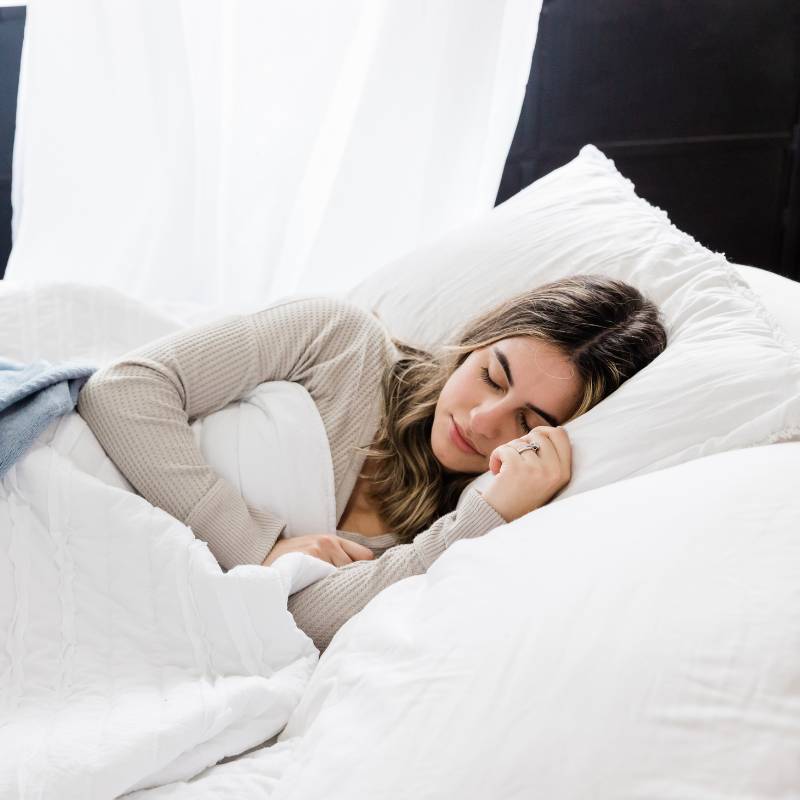
When you’re grounded for hours at a time — like during sleep — you give your body the time it needs to truly regulate.
That’s where the real magic happens:
-
Reduced inflammation
-
Better heart rate variability (HRV)
-
Improved parasympathetic activation
-
Lower cortisol levels by morning
Even if you’re fully clothed in pyjamas and never directly touch the sheet, you’re still grounded when using our premium underlay sheets. They’re specifically designed to maintain high conductivity through both your bed sheet and your clothing, ensuring continuous grounding regardless of your sleep position or attire.
Quick Tips to Maximise Grounding (Even in PJs)

-
Stick with natural fibres. Cotton, linen, and bamboo breathe well and support conductivity. Avoid synthetic pyjamas.
-
Moisture helps. Sweaty sleeper? Great. That micro humidity boosts electron transfer.
-
Don’t stress. You don’t need to micromanage your sleepwear. If you’re using a quality grounded underlay, you’re already covered.
Final Thoughts: You Don’t Need to Sleep Naked to Sleep Grounded
We designed our Urban Hippee grounding underlay sheets with real life in mind. People wear PJs. People use bed sheets. People like comfort. And grounding shouldn’t interfere with any of that.
Thanks to the natural conductivity of your body and the non-insulating properties of cotton fabrics — combined with the high-conductivity design of our premium underlay sheets — you’re still getting all the health benefits of grounding, even when fully clothed in pyjamas and covered by a regular sheet.
So next time someone asks, “Wait… can I wear clothes to bed and still get grounded?” — you can answer with confidence: Absolutely.
Related Blogs You Might Like
👉 Do Grounding Sheets Still Work Under Regular Bedding?
👉 Can I Use Earthing & Grounding Sheets With an Electric Blanket? Yes!
👉 Grounding and Earthing for Hot Sleepers