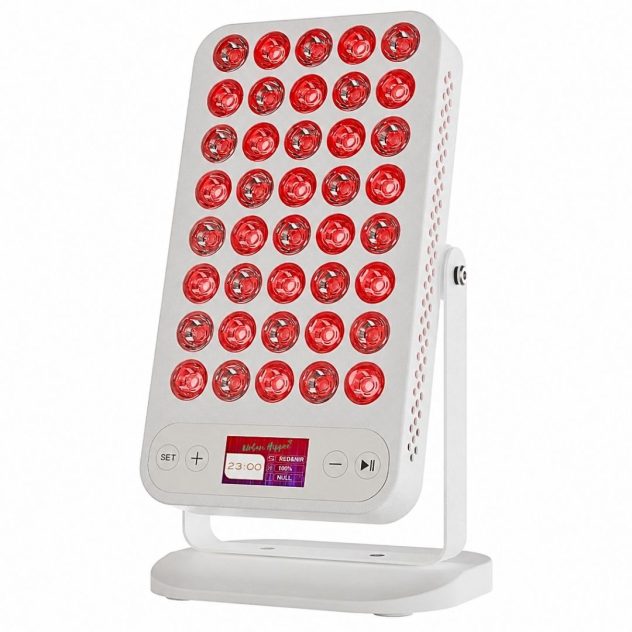
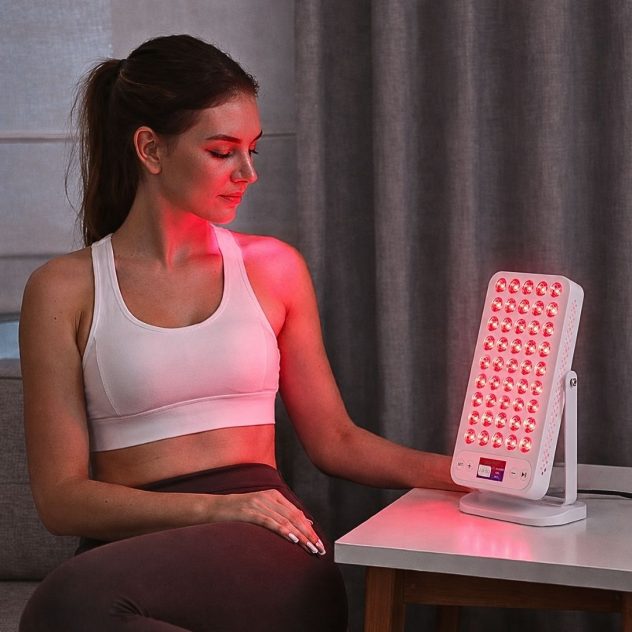
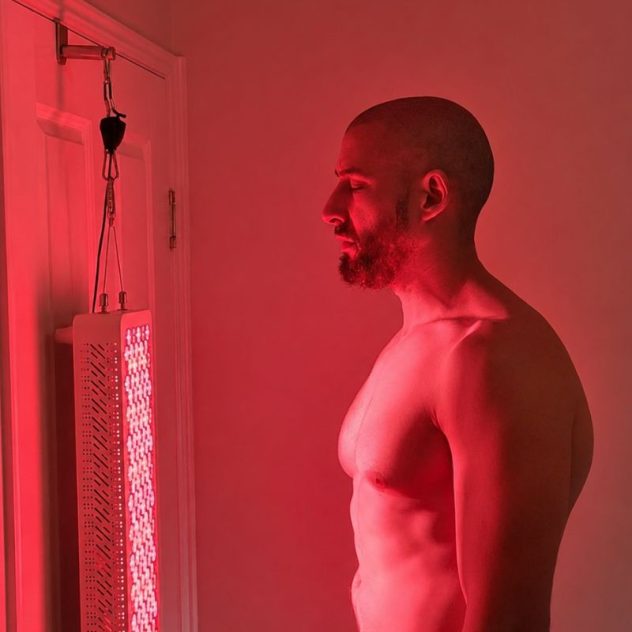
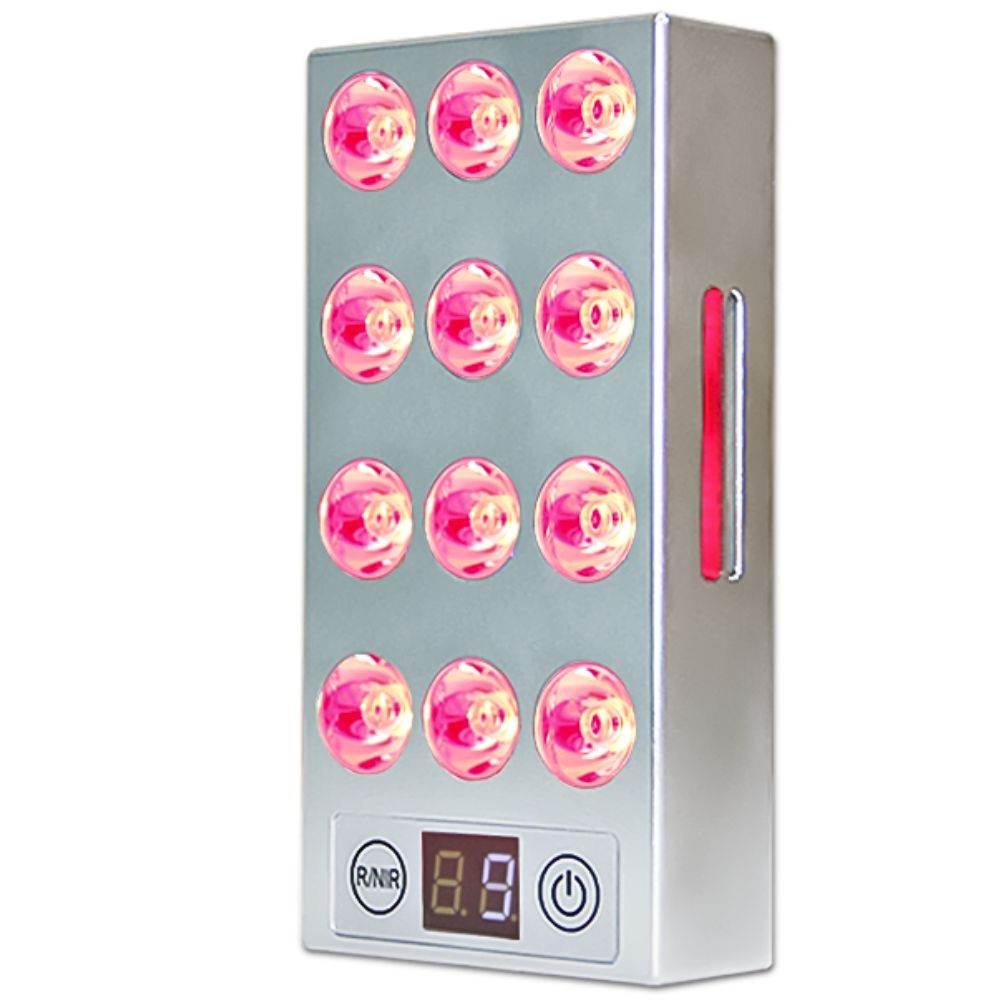
We primarily use 660nm red light and 850nm near-infrared light because they sit within two of the most established wavelength ranges used in photobiomodulation research and clinical applications.
660nm is commonly used for more superficial tissue, while 850nm near-infrared penetrates more deeply. Together, they provide broad coverage without unnecessarily spreading the panel's output across too many wavelengths.
Why not just add more wavelengths?
Because more wavelengths does not automatically mean better therapy.
A panel has a limited number of LEDs and a limited amount of electrical power. If you have a simplified 100-LED panel:
2 wavelengths = roughly 50 LEDs per wavelength
5 wavelengths = roughly 20 LEDs per wavelength
7 wavelengths = roughly 14 LEDs per wavelength
So as more wavelengths are added, the available output is generally spread across more wavelength channels unless the manufacturer also increases the number of LEDs, power and cooling capacity.
That means a panel advertising 7 wavelengths may actually deliver less 660nm and 850nm output than a panel designed to concentrate its power into those two established wavelengths.
Other wavelengths can absolutely have value, which is why we also offer selected Multiwave models. However, our standard panels deliberately focus on strong 660nm and 850nm output rather than adding extra wavelengths simply to increase the number on the specification sheet.
When it comes to red light therapy, wavelength count alone matters far less than the actual dose of useful light being delivered.